
Death, the Great Leveller
In England we swallow our feelings. We concentrate on the birds. We button grief up as firmly as our coats. In the Bahamas grief is loud, physical and unashamed....

Strangers and friends alike have written to tell me that some of the things I have shared here about the loss of my Mum have helped them.
I am deeply touched by that. What I had not expected was how much sharing these thoughts would help me too.
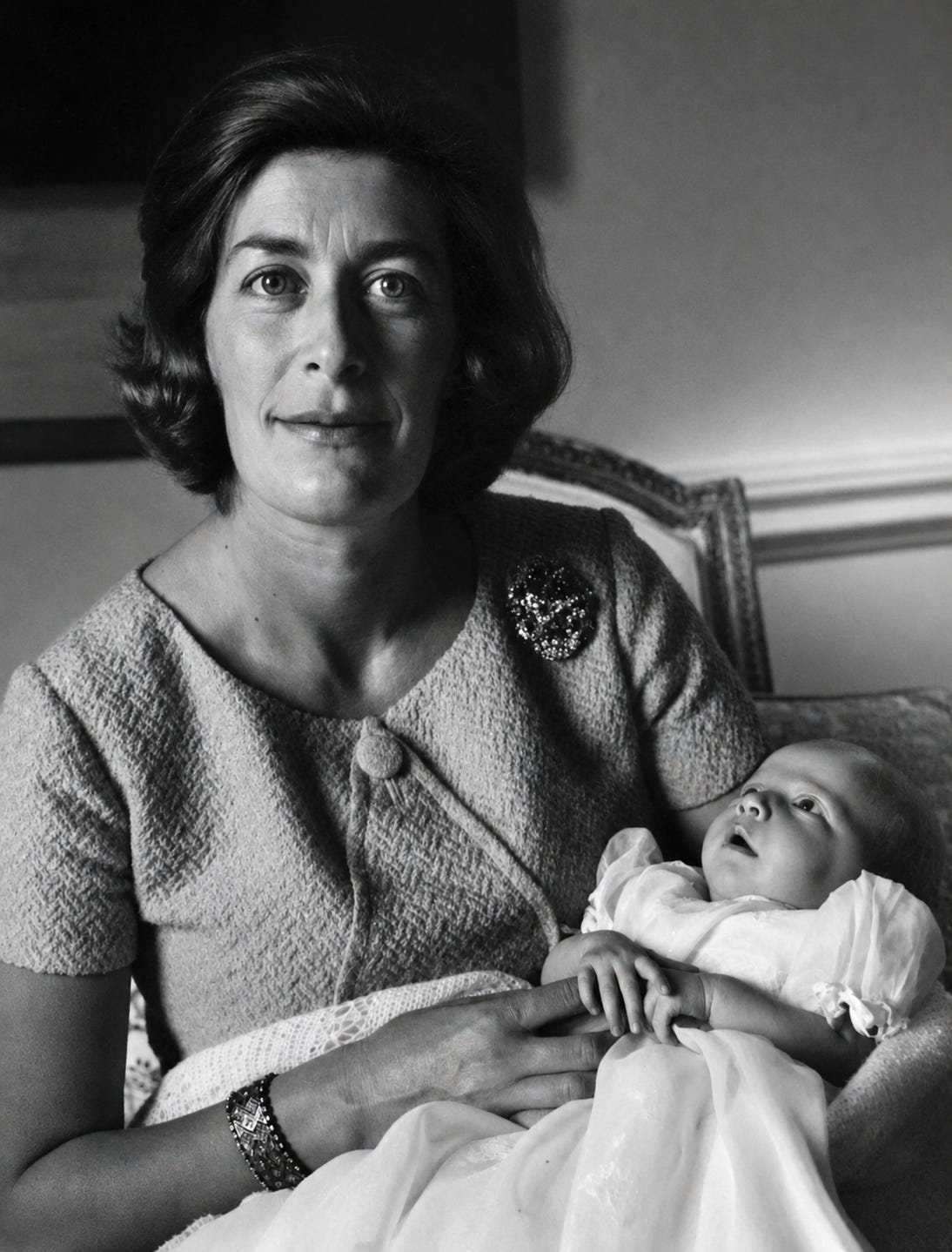
Death, as we know, is the great leveller.
It does not care who we are, what we have, or where we live. It wounds us all. It reduces each of us, eventually, to the same helpless human state: someone we love is gone, and there is absolutely nothing we can do to bring them back.
That is not to say that every death and every ache is the same. It plainly is not.
My mother died at ninety-seven. It was the natural cycle of life, and an exceptionally long, rich and adventurous one. Her death was not a tragedy in the way that the death of a child is a tragedy, or the sudden loss of a young husband or wife. I am not grief-stricken. I am not tormented by the injustice of it.
I know how lucky I was. I know how lucky she was.
But how do we grieve? How do we mourn? Is grief shaped by character, by culture, by upbringing or by what we have been taught is acceptable to reveal?
I grieve quietly.
I try to appear strong for my family. I do not want them to feel responsible for my sadness.
I pull myself together. I get dressed. I make plans. I carry on.
Do men and women grieve differently? Is a man still made to feel weak if he cries? Do I secretly regard myself as weak when I cry?
Perhaps I do, a little.
Some people weep. Some organise. Some become very quiet. Some fill every available hour. Some need to talk endlessly, while others cannot bear to speak at all.
The contrast between the way we mourn in the Bahamas and the way we mourn in England could hardly be greater. In the Bahamas, grief is often loud, communal and visible. In England, it can feel almost instinctively restrained.
I felt that difference most sharply at my mother’s graveside.
Her wicker coffin was lowered slowly into the ground. Everyone stood in complete silence. The silence was so profound that the birds seemed to take over. For those few minutes, they were all we could hear.
A dear friend had travelled from the Bahamas to be with us. Afterwards, she told me that she had found that moment cripplingly difficult. She felt that only the immediate family should have been gathered around the grave, rather than the entire congregation standing there, witnessing such naked sorrow.
But she has lived most of her life in the Bahamas, where grief often has an entirely different sound.
The grief there is loud, physical and unashamed. People cry and wail. They raise their hands. They call out. Occasionally, someone faints. There is music and movement, prayer and sermons. After the service, a marching band leads the way to the graveside, brass instruments blazing, drums beating, mourners walking behind in the heat, some crying, some singing, some dancing, their grief carried out into the street for everyone to see.
Grief is not expected to make itself small or to apologise for taking up space. Bahamian traditions have long emphasised precisely this communal expression of sorrow, whilst in England we button grief up as firmly as our coats.
We stand stiffly beside the grave, looking straight ahead, trying not to become the person whose tears cause everyone else to cry. We swallow our feelings. We concentrate on the birds.
And yet part of me understands the urge to sway behind a band as it makes its way down Bay Street, to let the music carry some of the sorrow, to cry without embarrassment, and to allow grief to be seen rather than carefully contained.
Perhaps neither way is better. Perhaps we simply need different languages for unbearable things. What do you think?

Written beautifully, both ways work❤️❤️
Dear India, as QEII said and it is carved in a pillar in St. Thomas' Episcopal Church in NYC, "Grief is the price we pay for love." For me, seeing that, it was the message that I needed to go on. Love never dies. I miss my people that have gone on before me, deeply, but the love that I feel for them still abides in my heart. All emotions and all ceremonies and revelries are allowed. Let that big band play for Lady Pamela. I think she would love it.