
Ukraine Today
A battlefield of trenches and microchips, mud and algorithms

Six months ago, when I last stood in Kyiv, there was still a thin thread of hope humming beneath the surface of daily life. This time, that hum had quieted.
After Russian strikes critically damaged two thermal power plants and hit key substations, residents can now depend on electricity for only a few unpredictable hours each day. As my friend Olga told me, “You don’t know when the electricity is coming. If the power returns in the middle of the night, you get up to do the washing in the middle of the night.” In sub zero darkness, everyone now sleeps in three coats, and mothers lie awake counting each breath, terrified they cannot keep their babies warm until morning.
During this trip I sat with grandmothers and university students, young mothers and ageing fathers. With children who have lost parents. With families fractured by occupation, exile, or death.
Young graduates spoke to me of feeling suspended. They are educated, ambitious, thoughtful, and yet their lives feel paused. How do you plan a wedding or imagine children when the horizon itself feels unstable?
One man described living under Russian occupation for 142 days whilst helping neighbours and friends escape. When Conrad, my son who had returned with me to volunteer, asked what it was like, he said he looked into a Russian soldier’s eyes and saw “a pigdog looking back.” His friend, who also tried to assist others, was captured and tortured, with bleach poured over his hands and metal picks forced beneath his fingernails. He showed us photographs. A grandmother wept as she told us she was alone now. Everyone was dead, she said. There are no dramatic flourishes to these conversations. Just facts delivered in exhausted voices.
One evening Olga, Vitaly, Conrad and I go out for supper. Olga is beautifully turned out; beside her I feel a little shabby in my “mission clothes.” She tells me that she and her friends believe it is important to keep up appearances, a quiet declaration that identity and normality will not be erased by war.
I tell my mother this when I get home. She reminds me that during the The Blitz, even as bombs fell over London, women queued for rations with their hair set and lipstick carefully applied, embodying what became known as the “beauty as duty” spirit, a small but defiant insistence that morale and dignity still mattered.
From Kyiv we travelled to Zaporizhzhia with Global Empowerment Mission, the disaster relief organisation I am part of. Four years after the invasion began, GEM remains deeply embedded here. Across an active frontline, GEM teams navigate punishing conditions to reach families isolated by conflict, delivering essential kits. Their trucks push into remote and heavily affected areas where communities might otherwise endure months without assistance. We met a grandmother living alone in a small house still vulnerable to daily missile threat. She started to cry when I hugged her. GEM is her lifeline, she told us.
GEM also runs a critical Window Program, repairing and securing damaged homes by replacing windows shattered by nearby missile strikes, helping families remain in their homes. Until the Russians occupy their communities, Ukrainians want to stay at home.
We saw newly dug trenches stretching across frozen ground, reinforced with concrete anti tank teeth designed to halt advancing armour. We met again with our friend the general, who described the accelerating role of drones. Some are small first person view devices adapted from commercial models and used for reconnaissance or precision strikes. Others are loitering munitions that hover and wait for a target before diving. There are drones nicknamed ‘waiters’ that land and sit silently on the ground to conserve battery life, activating only when a vehicle approaches. It is a battlefield of trenches and microchips, mud and algorithms.
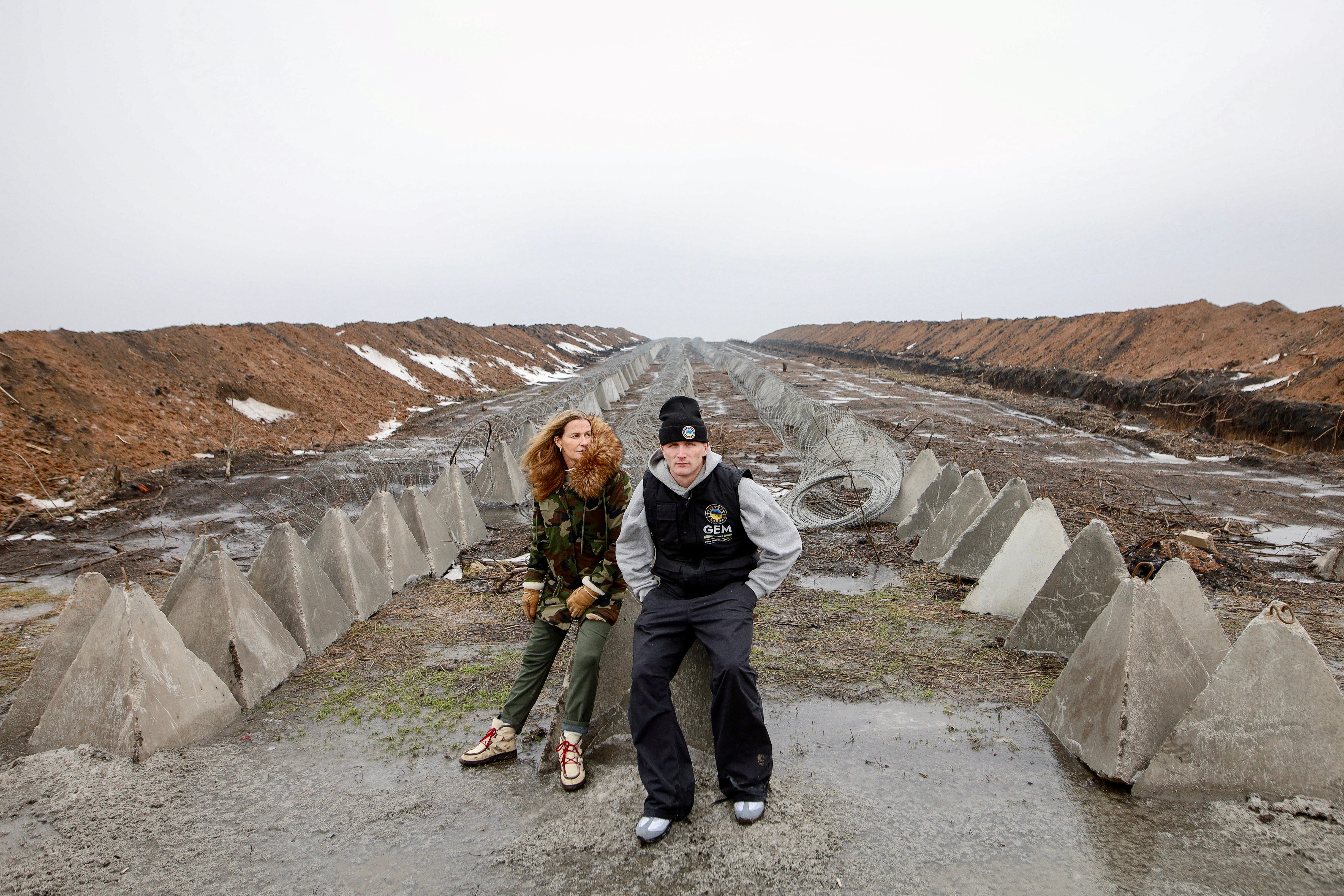
What I carry home is not only the devastation, but the endurance. The mother navigating blackout schedules. The opera sung in half light. The volunteer loading trucks before dawn. The child waiting patiently beside the remnants of rockets.
Across Ukraine in the darkness, resilience persists.

P.S For more about this trip read my previous post. And if you are interested in supporting GEM’s efforts click here.
Your extraordinary courage, India, is even more poignant for me as all four of my great grandparents and three of my grandparents were born in what is now Ukraine.
Beauty as duty" is an expression I never heard before, and I am very grateful for that understanding as when I used to visit the hospital with my father, a surgeon, when I was two, to cheer up his patients, I always wore a party dress.
Not sure how one has any hope with this horrific senseless war. Heartbreaking and no words suffice. Your care and commitment is remarkable ❤️💪🙏