
Ride Before You Walk

I grew up in a family where you learnt to ride before you learnt to walk. My grandfather, was a great polo player; he even wrote one of the establishing books on the sport under a clever pseudonym: ‘An Introduction to Polo, by Marco’. I always slightly regret that I didn’t learn to play polo myself. But I used to hunt, took show-jumping lessons and even once or twice entered cross-country competitions. In my modelling days, I found my way onto horseback. “Wouldn’t a horse make this photograph feel so much better?” I would suggest to a client, and oddly, they agreed.
I still ride as much as I can, wherever I can, whenever I can, because it’s good for my soul. I’ll be in Australia on a press trip and will somehow find a half-day in the schedule and someone with a horse, or I’ll be in Nashville and, by hook or by crook, I’ll seek out a new friend with a Tennessee Walker hidden away somewhere. I’ve trotted around the Egyptian pyramids at dawn; I’ve galloped, pregnant, along dry riverbeds in Rajasthan and ridden the Peruvian Paso horse in Peru, amazed by its unique four-step timing and gentle gait. I also once took an extraordinary adventure with my mother on horseback through Argentina.
Now living in the Bahamas, I’ll often go riding with my daughter Domino and our island horse whisperer, Marty. In the quiet season, we’ll sneak through gardens and around pools and down driveways, back onto the beach for a canter home through turquoise waters and along pink sands. (If you love Briland please consider a small donation towards the horses. It takes a lot to maintain them)
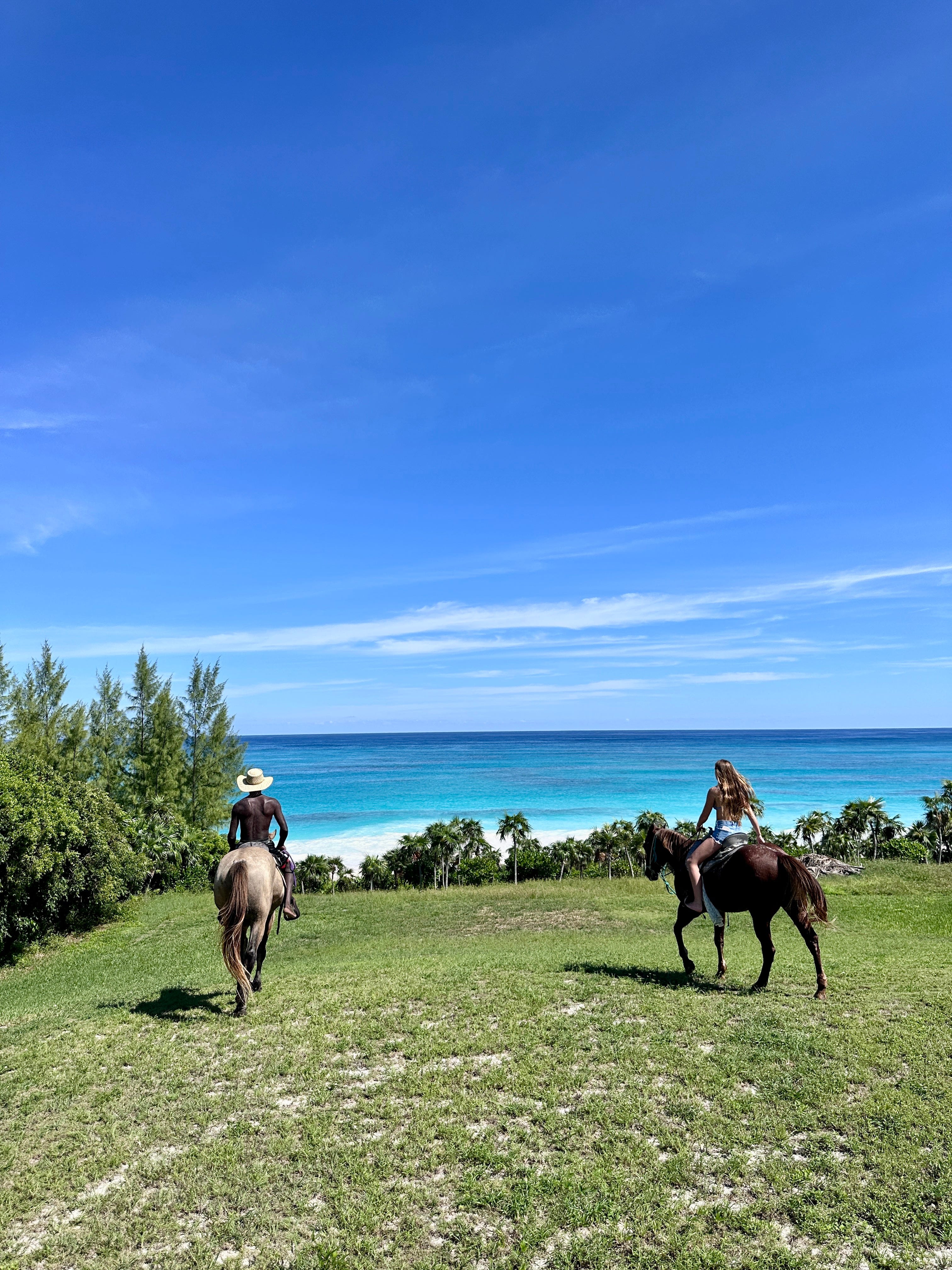
So, when Kathryn reached out to ask if I would write the foreword to ‘Horse Country’, I didn’t hesitate. ‘Horse Country’ gallops through the rugged romance of the American West, the polished tradition of English riding, and the effortless luxury of a life woven with leather, linen, and the thunder of hooves.
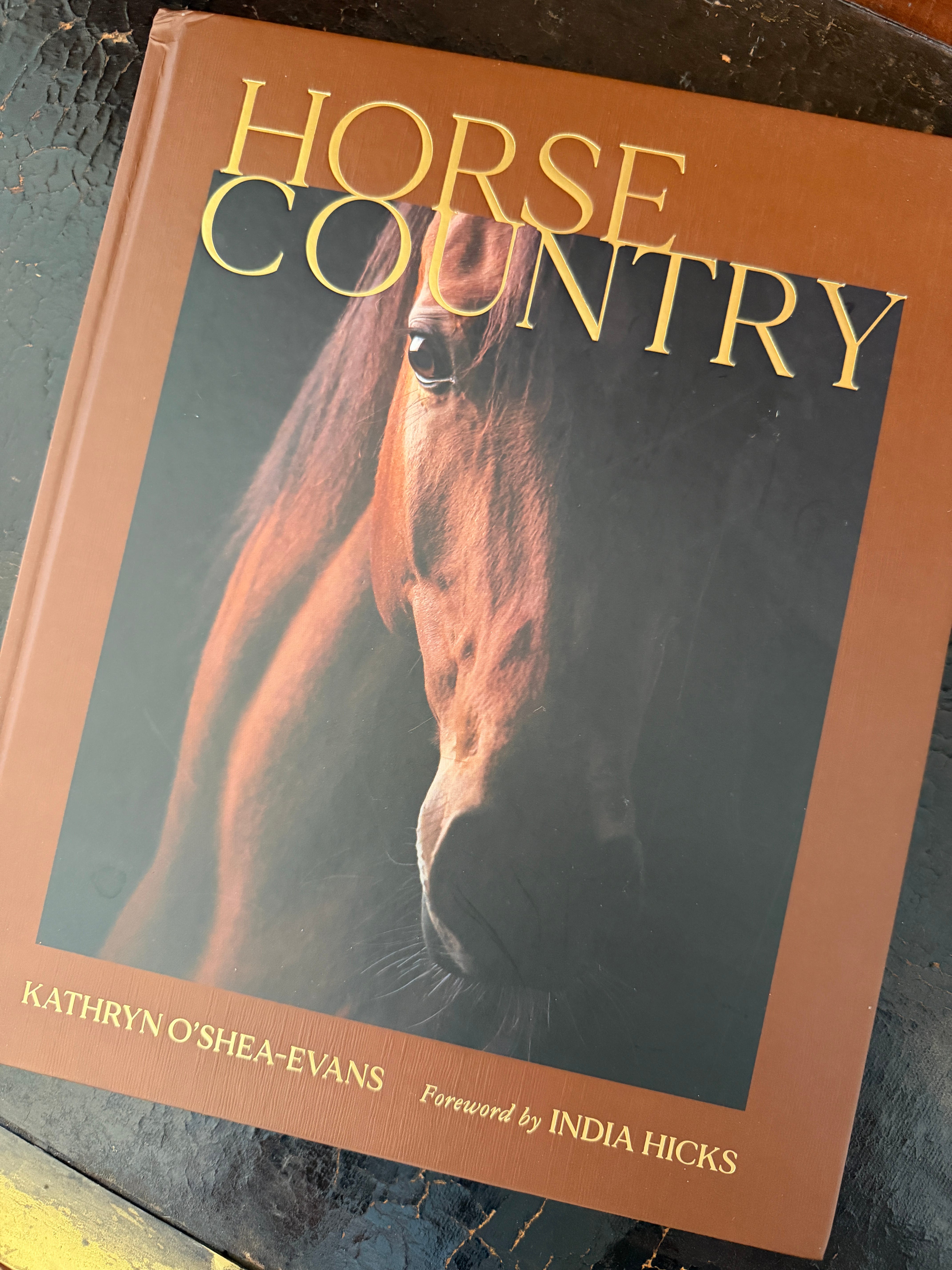
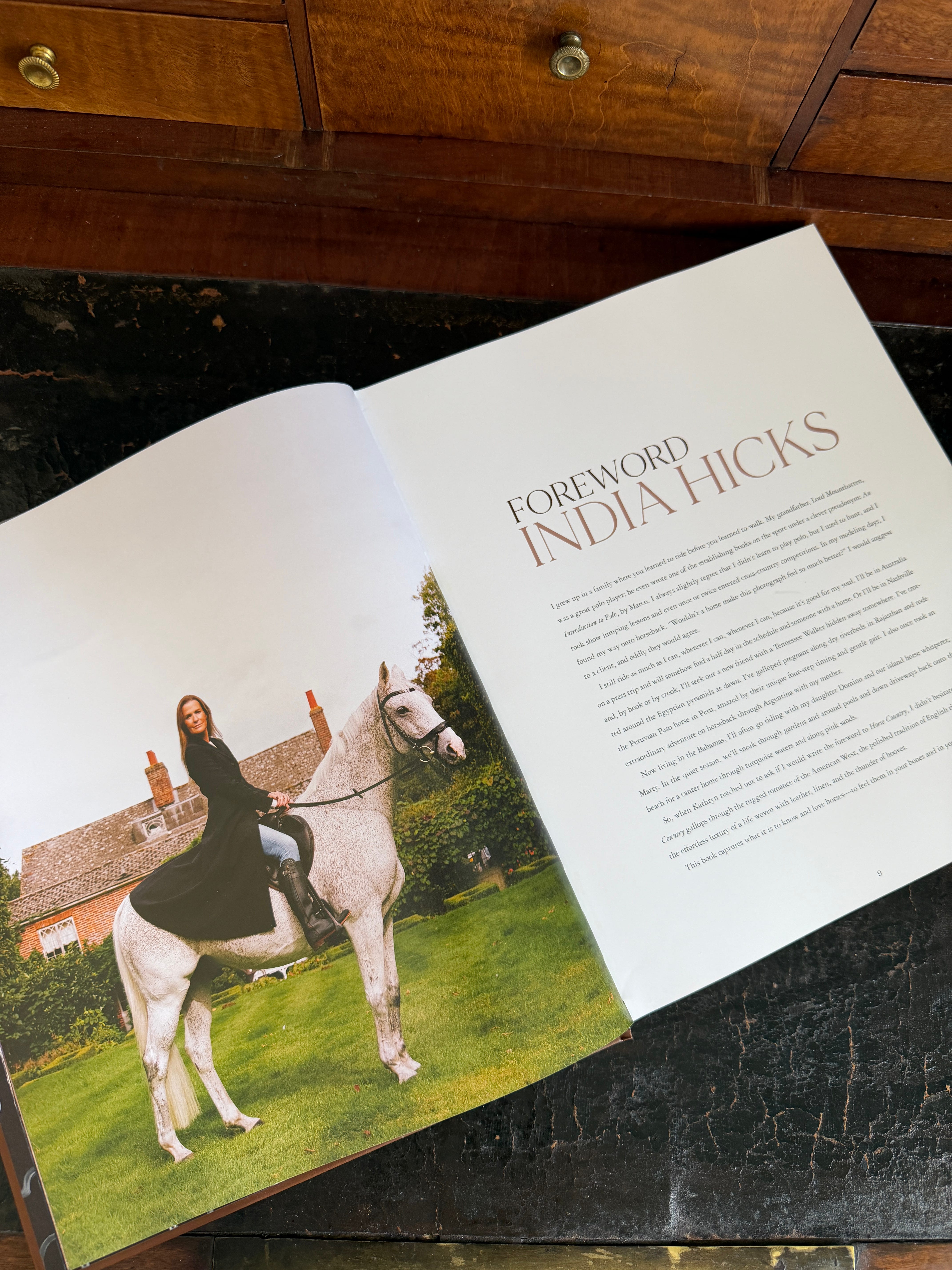
This book captures what it is to know and love horses—to feel them in your bones and in your heart.
But horses are only part of it.
I love most of the creatures that surround us at home on Harbour Island: spiders, sharks, dolphins, parrots, the gigantic money moths and starfish, even the weird swimming pigs. I am less enthusiastic about the flying cockroaches, the stinging ants, the occasional scorpion or the snake that ate our lovebirds… When the children were young, we gave each of them a lovebird and built a large aviary. One night, a snake found its way inside and ate all five of them. In an audacious move, the snake then fell asleep in their little nesting box.
Dachshunds, in particular, seem to be a hereditary condition in our family. My first dachshund was Bumble, given to me by my mother when I was ten. Today, we have Stretch, who is neurotic, demanding and deeply loved. He is useful around a pickleball court and can surf a gentle wave. He has also developed a particular talent for getting onto our bed. David says no. I say no. Stretch waits until I am asleep and then quietly renegotiates the arrangement.
Bond, our white Bahamian potcake, whom we found abandoned as a puppy, has appointed himself head of security. We have never needed to lock our house because Bond will raise the alarm at the slightest hint of an uninvited guest. (He also appears on the cover of my new book. Top billing for Bond.)
There are also twin cats, Kit and Kat, discovered as kittens in a bin at the end of our lane. We still don’t know who is Kit and who is Kat. And then there is Vincent, a tortoise from St Vincent. We found him when he was tiny and carried him home in a pencil case. He is now roughly the size of a small ottoman.
Then there was Jenga, a parrot with a crossed beak who never learnt to say anything rude, which was slightly disappointing.
My work with Global Empowerment Mission has taken me into disaster zones where the suffering of animals can be almost as difficult to witness as the devastation around them. In Ukraine and elsewhere, we have encountered abandoned dogs and cats carrying terrible fear and trauma. The hardest part is resisting the urge to bring every one of them home.
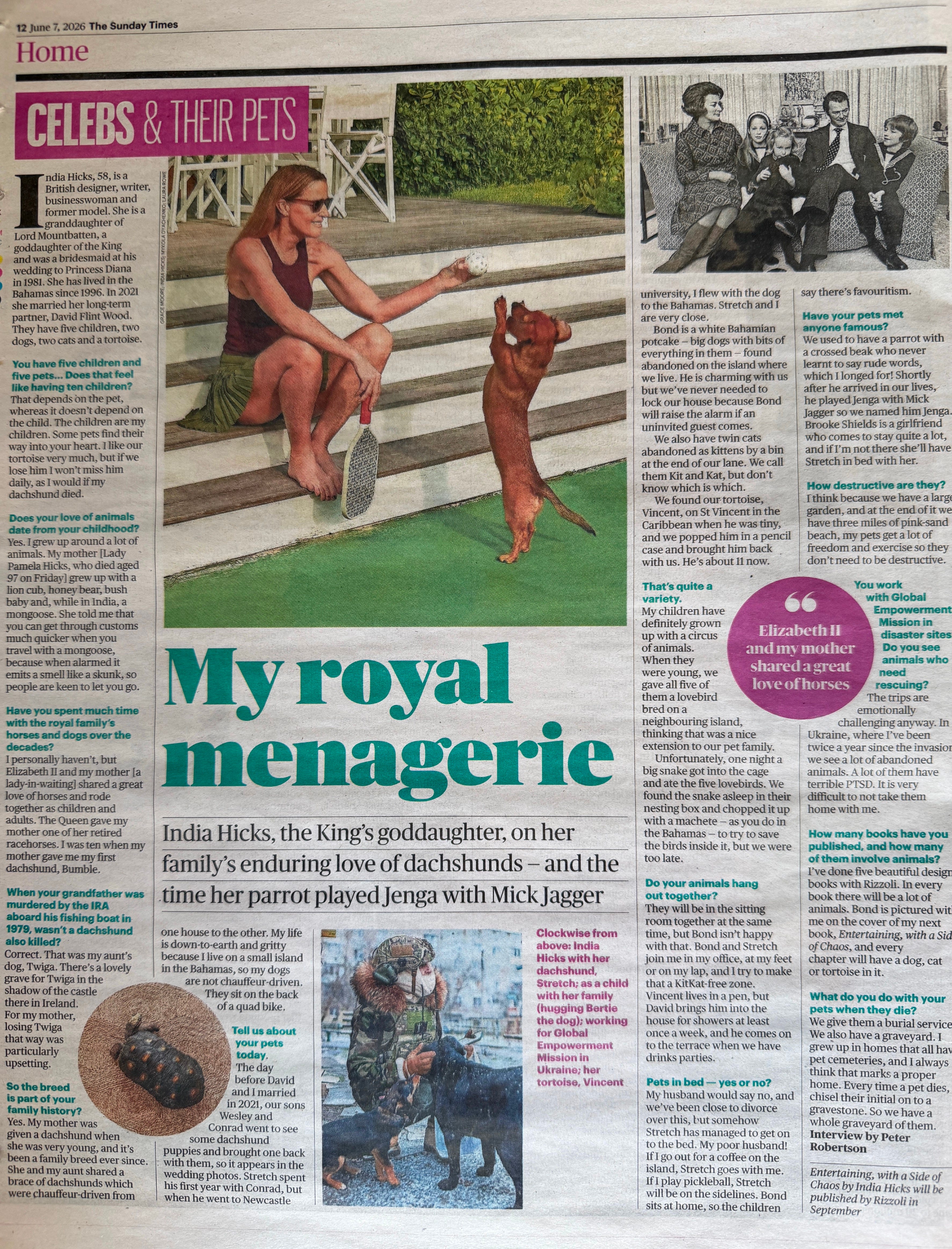
The Sunday Times recently came to ask me about this menagerie: the dachshunds, the potcake, the cats, the tortoise, the parrot and all the animals that have wandered through our family history.
They also asked what happens when our pets die. We bury them in a little graveyard beneath our yellow elder tree, on our sandy path. Each one has a gravestone, carved with an initial by one of us. We walk by them on our way to the beach most evenings, and in that way, they remain exactly where they always were—at the heart of our family.

Here’s to dachshunds being a hereditary condition and may you always have one in your life.
Beautiful piece. Thank you for all you do. For Ukraine, for the animals, for humanity. Blessings. ❤️❤️